STRIDE
ACCELERATOR
PROGRAM
More Ice Time.
Same Body Problems.
Every spring, hockey and ringette athletes log more ice time, work harder, and come back in September skating almost identically to how they left. Not because they didn't put in the effort. Because they were reinforcing existing patterns instead of fixing what was underneath them.
More ice time makes a skater more practiced. It doesn't make them mechanically better. That work has to happen off the ice — in a program designed specifically to rebuild the foundations that skating cannot fix on its own.
Reinforces What's Already There
Every hour of skating practice deepens the movement patterns your athlete already has — efficient or not. If the foundation is compromised, ice time makes that foundation more permanent.
Fixes the Foundation First
We address the foot mechanics, hip load, and neuromuscular patterns that skating can't self-correct. When you step back on the ice, you're capable of a position you couldn't reach before.
"The goal isn't to get better at the skating position you currently have. The goal is to attain a new one — deeper, stronger, more powerful. Then hold it. Then explode from it."
— Greg Almon, Jungle Athletics Calgary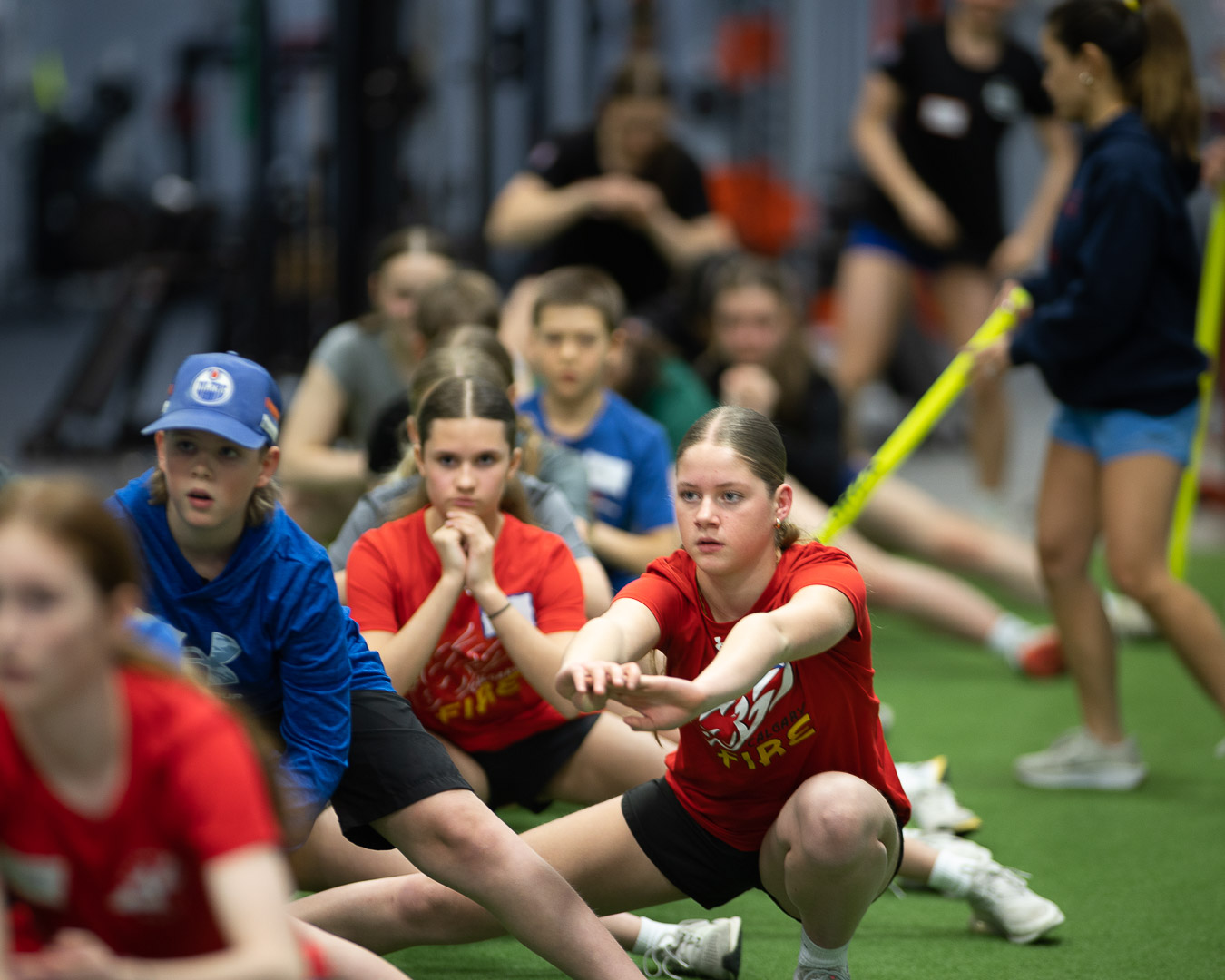
Attain. Hold. Explode.
The Stride Accelerator is built on a three-phase progression model. Each phase has a specific objective — and athletes only move to the next phase when they've genuinely earned it.
Attain — Build the New Position
Develop the foot mechanics, ankle mobility, hip loading patterns, and neuromuscular coordination needed to reach a skating position the athlete couldn't access before. This is the foundation. Everything else sits on top of it.
Hold — Make It Automatic
Build the strength, stability, and neuromuscular endurance to maintain the new position under load and fatigue. A position an athlete can reach but can't hold under game conditions isn't an improvement — it's a drill result. We train to hold it when it counts.
Explode — Express Power From the Foundation
Once the position is attained and held, the athlete develops the rate of force development and explosive capacity to push from it at game speed. This is where stride length increases, first-step quickness improves, and the on-ice difference becomes visible.
Built under Olympic pressure. The Attain-Hold-Explode framework was developed through four years inside China's national short track speed skating program under coach Li Yan — the most demanding skating coach in the sport. The program produced 7 Olympic Gold Medals at the 2010 Vancouver Games. The same principles now drive every athlete through the Stride Accelerator.
Build the Position.
Own It. Project From It.
Every element of this program flows through four non-negotiable stages — in order. You cannot shortcut the sequence. Neither could Wang Meng. Neither can your athlete.
Most hockey and ringette players can't fully attain the optimal skating position. Their ankles won't dorsiflex. Their knees won't track. Their legs skate too straight, losing power with every stride. Before anything else, we build the body that skating demands.
The position must become automatic — not just briefly accessible. This is the heart of the program, borrowed directly from Chinese Olympic speed skating. Banded crossovers are the single best exercise for developing outside edge strength. Most hockey players have almost none.
Only once structure and stability are secure do we layer power. Jump integration, banded deceleration work, and stop-start tolerance. Skating is a game of starts and stops — we train both sides of the acceleration coin.
One purpose: create a more powerful skater. Not skills. Not puck handling. Pure expression of everything built off the ice. Organized at Calgary rinks including Flames Community Arenas. Encouraged, not mandatory.
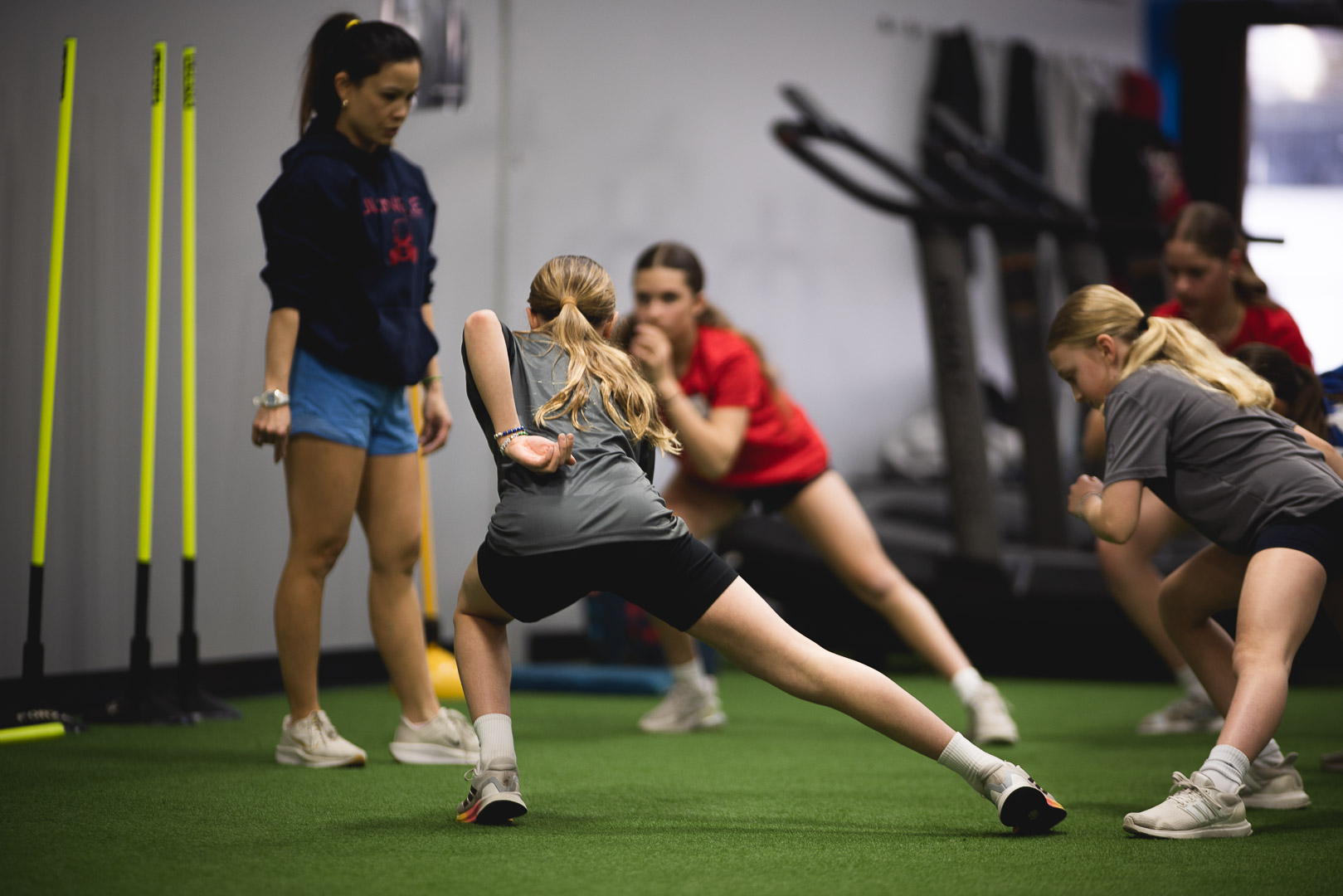
What SAP Athletes
Actually Train
The foundation of every skating stride. Arch strength, ankle mobility, calf-Achilles elasticity. Skate boots compress the foot into a brick — we undo that and rebuild the springs that power the stride.
The deepest, most powerful phase of the skating stride requires hip extension capacity most athletes simply don't have. We build it specifically, progressively, and with skating application at every step.
Every athlete is filmed. We review it with them — showing exactly what the body is doing, where the inefficiency lives, and what the correction looks like. When athletes see their own movement, something changes that coaching cues alone never achieve.
Getting into a new position once isn't the goal. Holding it under load, under fatigue, under game pressure — that's the goal. We train the specific combination of strength and neuromuscular coordination that makes the new position permanent.
We read every athlete every session — posture, ground contact, rhythm, elasticity. Training load adjusts to readiness, not the calendar. Athletes who push through depleted nervous systems reinforce poor patterns. We don't let that happen.
The program tracks the connection between off-ice work and on-ice output. Athletes and parents see exactly how the foundation changes translate to stride mechanics — not just how they feel, but how they move.
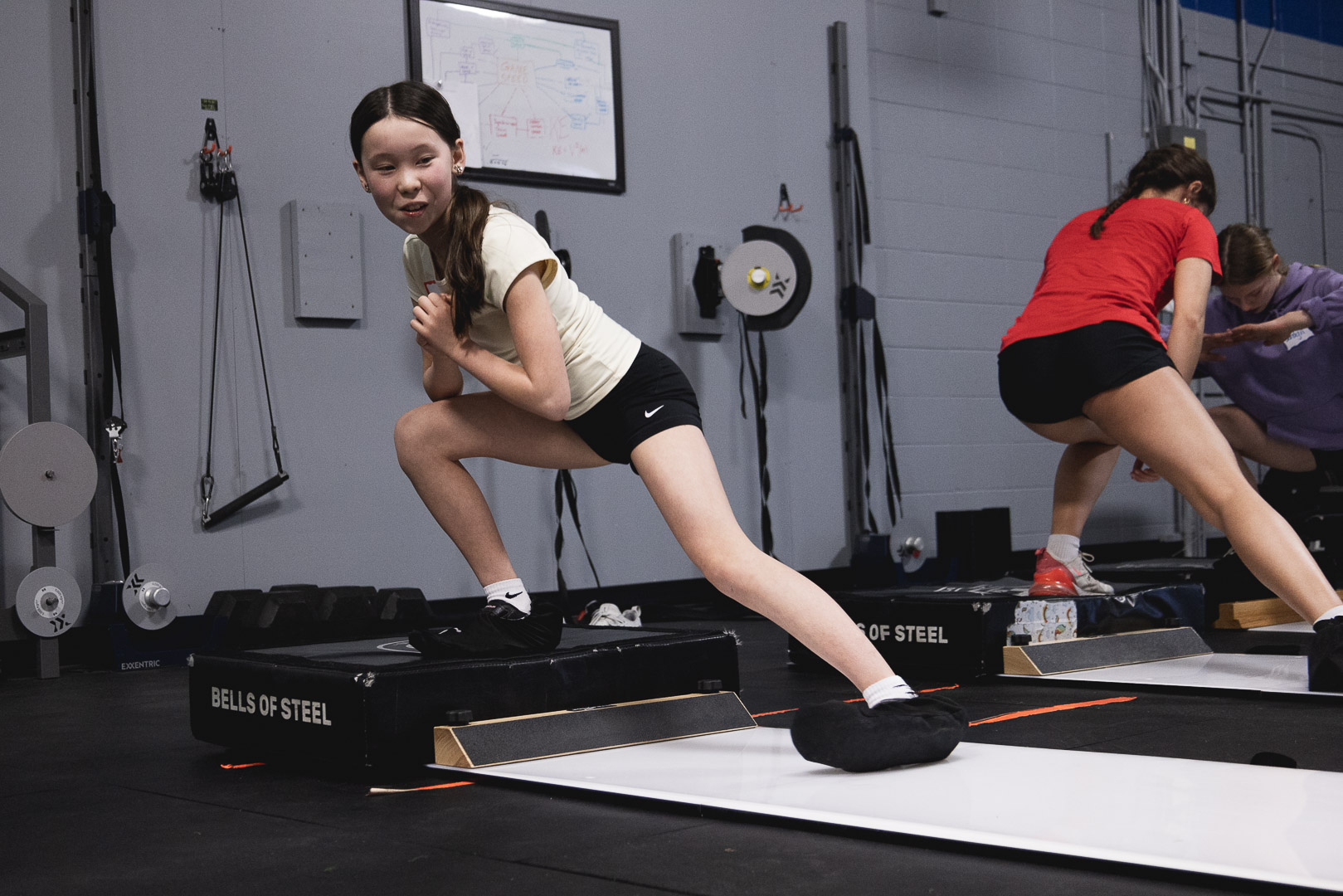
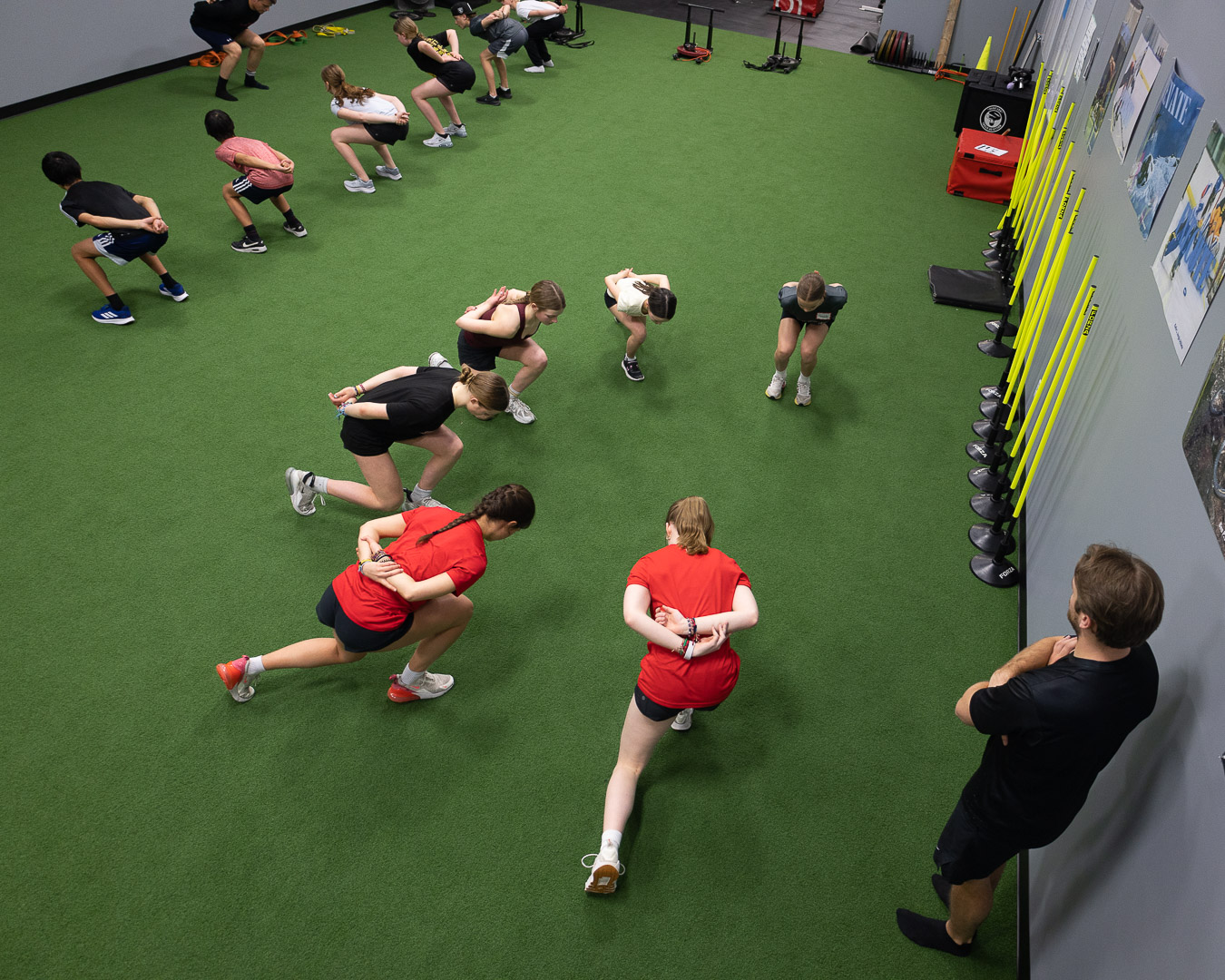
What the Results
Actually Show
Seasonal Program.
Permanent Results.
The Stride Accelerator runs in seasonal windows — timed specifically to align with the off-ice period when skating patterns can actually be rebuilt. Training the foundation during the season, while old patterns are being reinforced daily on ice, is significantly less effective.
SAP athletes complete the program in the off-season window, then return to their sport capable of skating positions they couldn't access before the program. The foundation they build carries forward into every season that follows.
Many SAP athletes move into our long-term VS1 or VS2 programs after completing a seasonal window — continuing the development work year-round once they've seen what focused off-ice training does for their on-ice performance.
Not sure if SAP or VS1/VS2 is right for your athlete? Book a free athlete analysis. We'll assess movement quality, skating mechanics, and athletic development stage — then tell you exactly which program fits and what to expect from it.
FAQ
Ages 8 to 14. This is the window where the foundational movement patterns that skating demands are most trainable. We work exclusively within this range because the methodology is built around the developmental stage, not just the sport.
Hockey and ringette. Both sports make the same demands on the skating stride — outside edge strength, hip loading, ankle dorsiflexion, explosive first strides. The off-ice methods are identical because the on-ice mechanics are identical. Our ringette athletes have seen the same results as our hockey athletes, and in some cases better.
SAP is a seasonal program with a specific objective: improve a player's foundational ability to attain a deeper, more powerful skating position through speed skating methods applied off the ice. VS1 and VS2 are long-term development programs covering the full athletic profile year-round. SAP is the entry point — many athletes move into VS1 or VS2 after completing a seasonal window once they've seen what focused off-ice training does for their skating.
The current intake is full. The next intake runs June 29 to August 21, 2026. Entry is gated — every athlete must attend one of two required workshops first (see next question). Last intake oversold and this one will not be expanded.
Following last spring's oversubscription, attendance at one of two introductory workshops is required to enter the Summer 2026 intake.
Workshop 01 — Wednesday May 27, 2026 at 7:30 PM
Workshop 02 — Thursday June 4, 2026 at 7:00 PM
Each is approximately 90 minutes. Your athlete experiences the training first-hand, you see the methodology, and you leave with everything needed to make an informed decision. It is not a tryout — it is a required introduction. Spots are limited and will not be re-released.
Encouraged. We want parents to see the work and understand why every exercise exists. When a parent understands what their athlete is building, they can reinforce it at home and make better decisions about their athlete's overall training schedule. You're part of the process here, not just a drop-off.
No prior training experience is necessary. What is required is attending one of the two Summer 2026 workshops (see above) before being considered for the program. The workshop gives your athlete a real taste of the training, gives us a chance to assess where they are, and gives you everything you need to make an informed decision.
Two Workshops.
Pick One.
Last intake oversold. Summer 2026 is gated — every athlete must clear one of two introductory workshops first. Spots are limited and won't be re-released.
7:30 PM
7:00 PM
– Aug 21
★★★★★ 236 Five-Star Google Reviews
We'll confirm your spot within 24 hours. $10 is collected at the door on the day of your workshop—not today. No commitment required until you've experienced the training.