From Wanting APDL To NCAA Division I.
Real Calgary soccer players. Where they started, what was holding them back, and what changed.
Every one of them started with a free soccer analysis. Your player's story can start the same way.
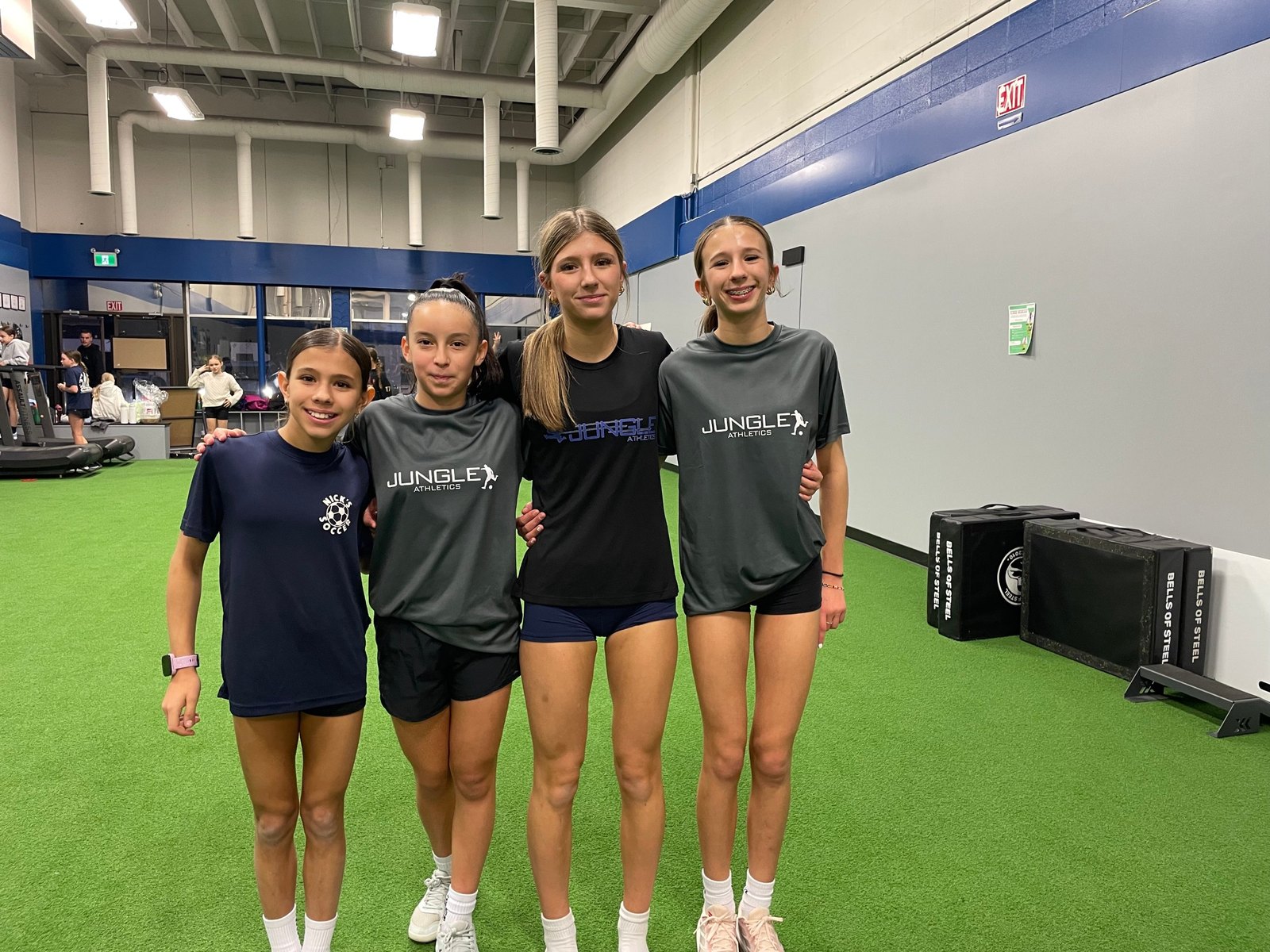
They Made It.
These four walked in as young players who wanted to make APDL. Today, all four are APDL athletes.
They started early, between 8 and 14, when speed is most trainable. The work was simple: fast, fresh sprints with full recovery, every one laser-timed, so they could watch themselves get faster week after week.
It's the same work our Friday group does now. Most soccer teams don't practice or play on Fridays, so players arrive with fresh legs. That's when speed actually improves.
Then Speed.
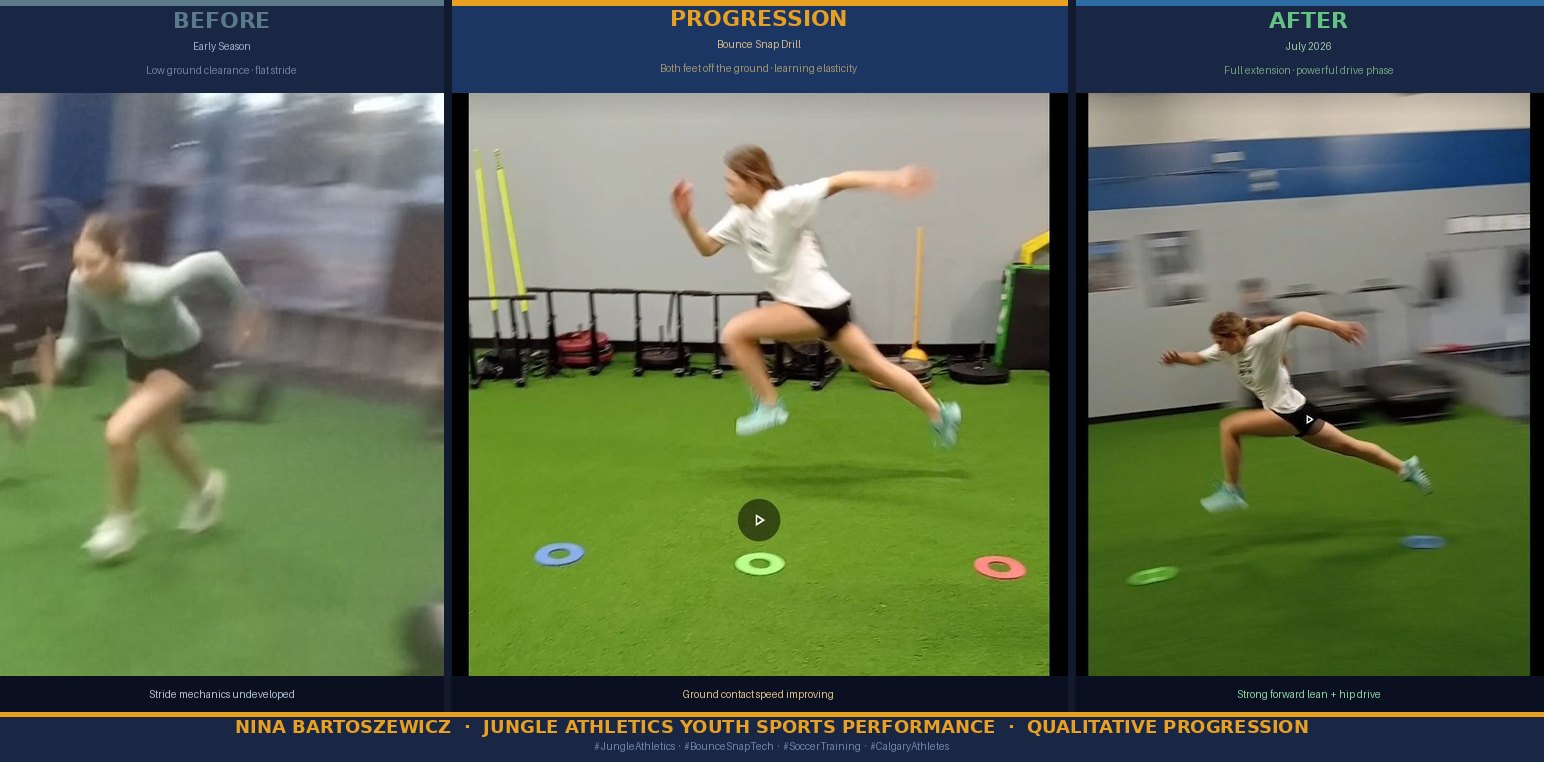
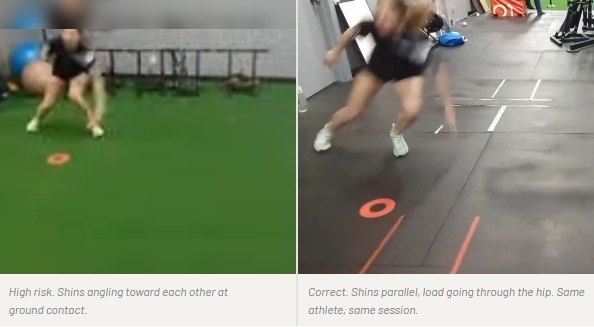
When Nina started a year ago, her stride was flat and her knees caved in every time she stopped sideways. That's the movement behind most knee injuries in girls' soccer.
So we built the brakes first: shins and knees lined up, hips doing the work. Our rule is simple: don't speed up what you can't slow down. Then we rebuilt her stride, getting her off the ground and driving forward. Like every athlete here, she watched her own reps on video. Seeing it is what changes it.
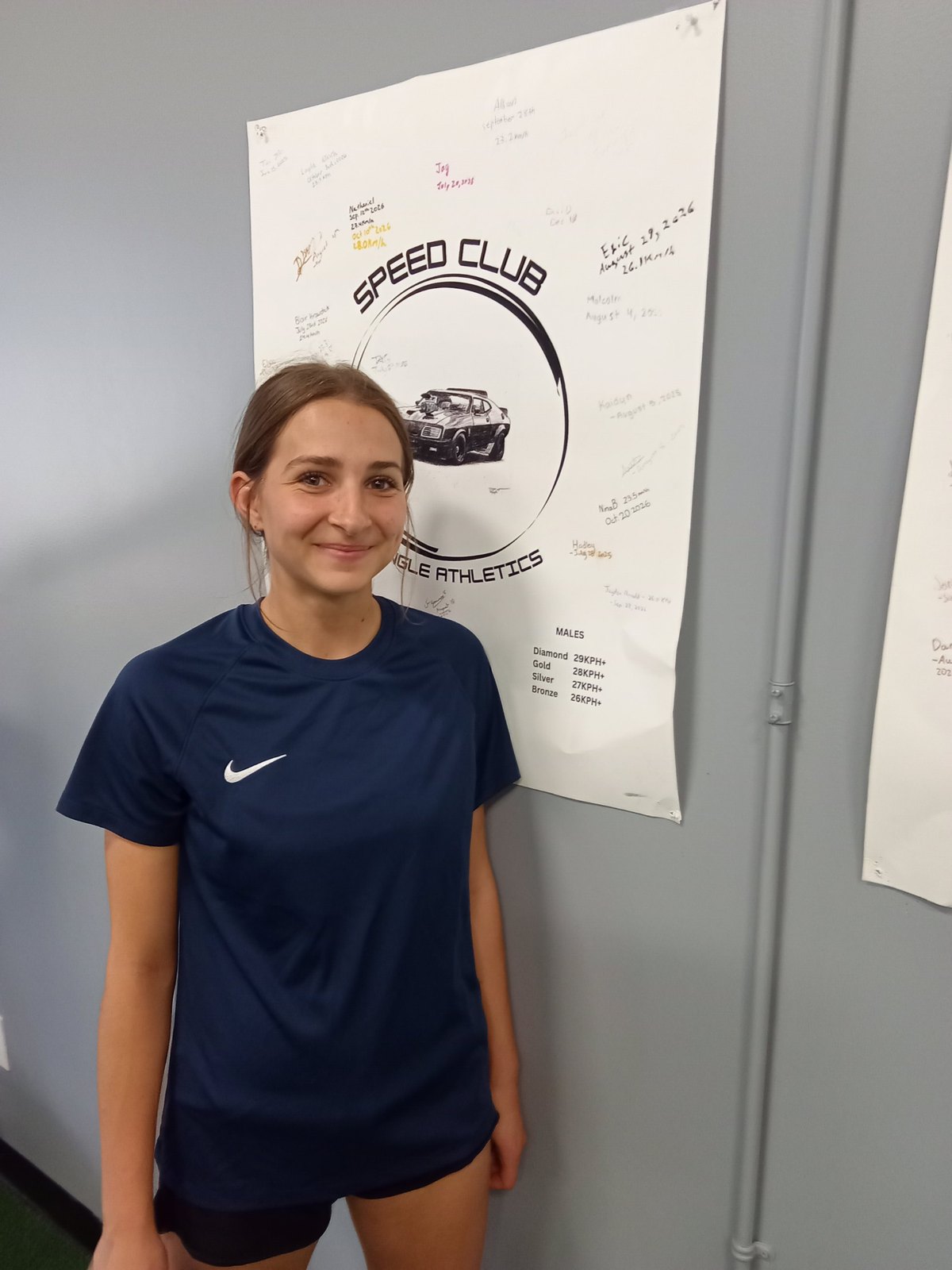
This October she set her speed record: 23.5 km/h, and onto the Speed Club board. Read Nina's knee story →
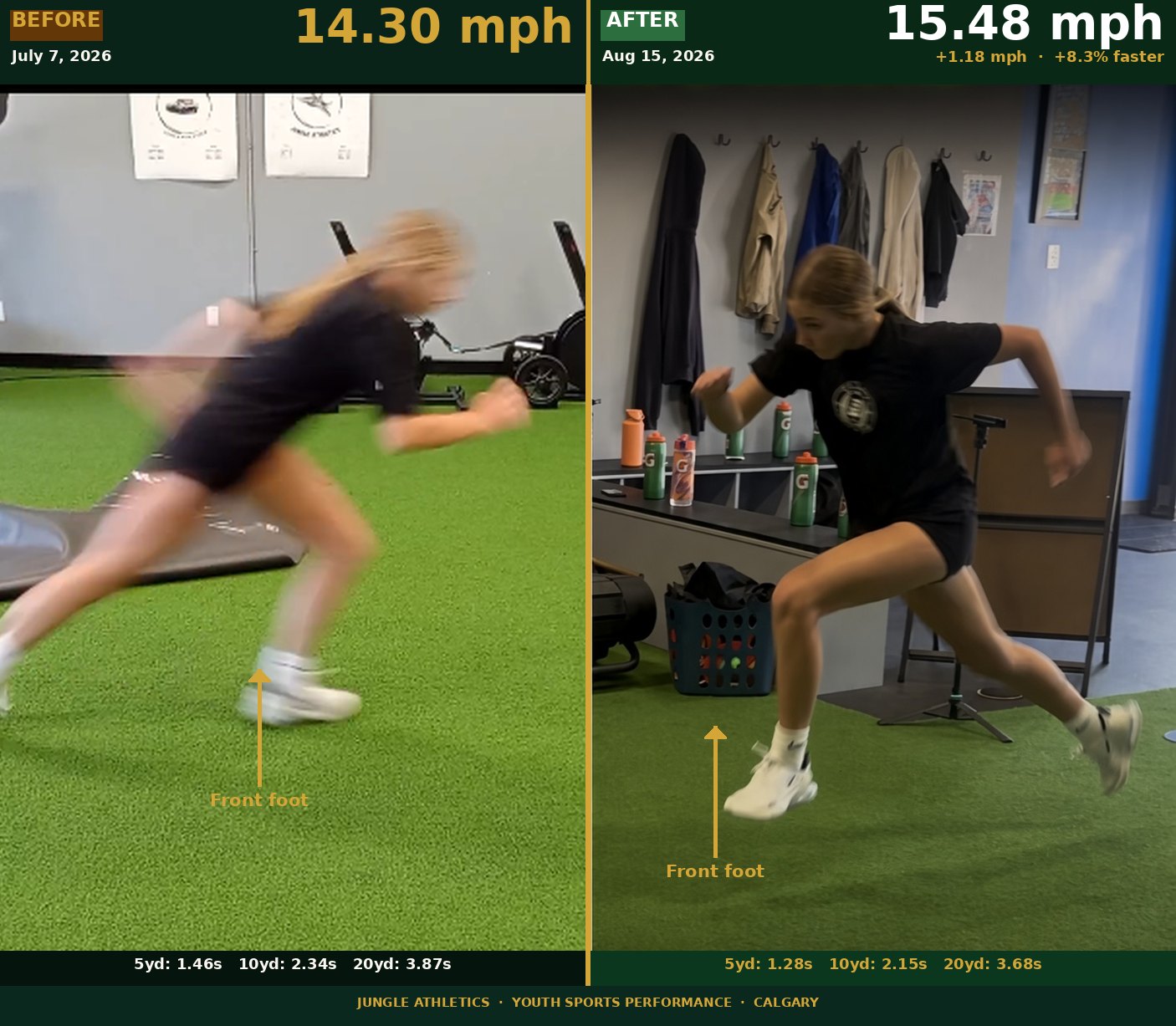
In Under Six Weeks.
Clover had the classic soccer stride: short steps, and her knee barely lifted when she accelerated. She'd been trained for years not to lift it, because that keeps the ball close when you dribble. Without the ball, it put a lid on her speed.
Telling a player to take bigger steps doesn't work. They nod, and nothing changes. Film them, and everything changes. We filmed Clover, showed her, and taught her to run without the ball. Same player, new stride.
(was 14.30)
(was 2.34s)
(was 1.46s)
Two Division I Futures.
Kaci and Kodi are friends. Both started with us at 13, and both just turned 16. They came in already good. They wanted to move better: braking, lateral movement, acceleration without the ball, and max-velocity sprinting.
They play a lot of soccer, so we never chased fatigue. Only performance. Most club "speed and agility" is a boot camp: short rest, everyone finishes exhausted. It feels like work, but tired isn't faster. Full recovery between every sprint is how top speed actually moves.

Already the fastest girl on her team when she walked in. Two years later: Nike sponsored, and committed to the Arkansas Razorbacks, NCAA Division I. The Relentless Rise of Kaci →
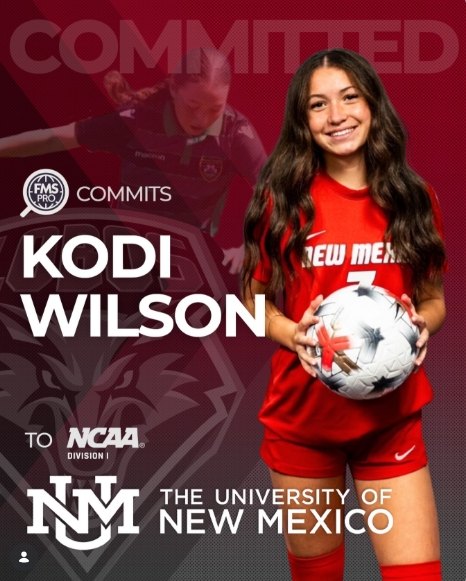
Same age, same work, same standard. Kodi has committed to the University of New Mexico, NCAA Division I.
"Everything they do clearly translates to the soccer field. They're quicker to the ball, stronger in challenges, more explosive in transitions."
Melissa Fabreau · parent of two soccer daughters
Every Story Started Here.
Your player trains with us while we watch, time and film. Then we sit down with you, go through the video, and tell you what's holding them back and what we'd build first.
Winter Soccer Speed. Fridays.
No games. No practice. Just faster. Winter is when soccer players finally have time to upgrade the engine and the wiring.
Questions about the Friday group? Call 403-462-8424.
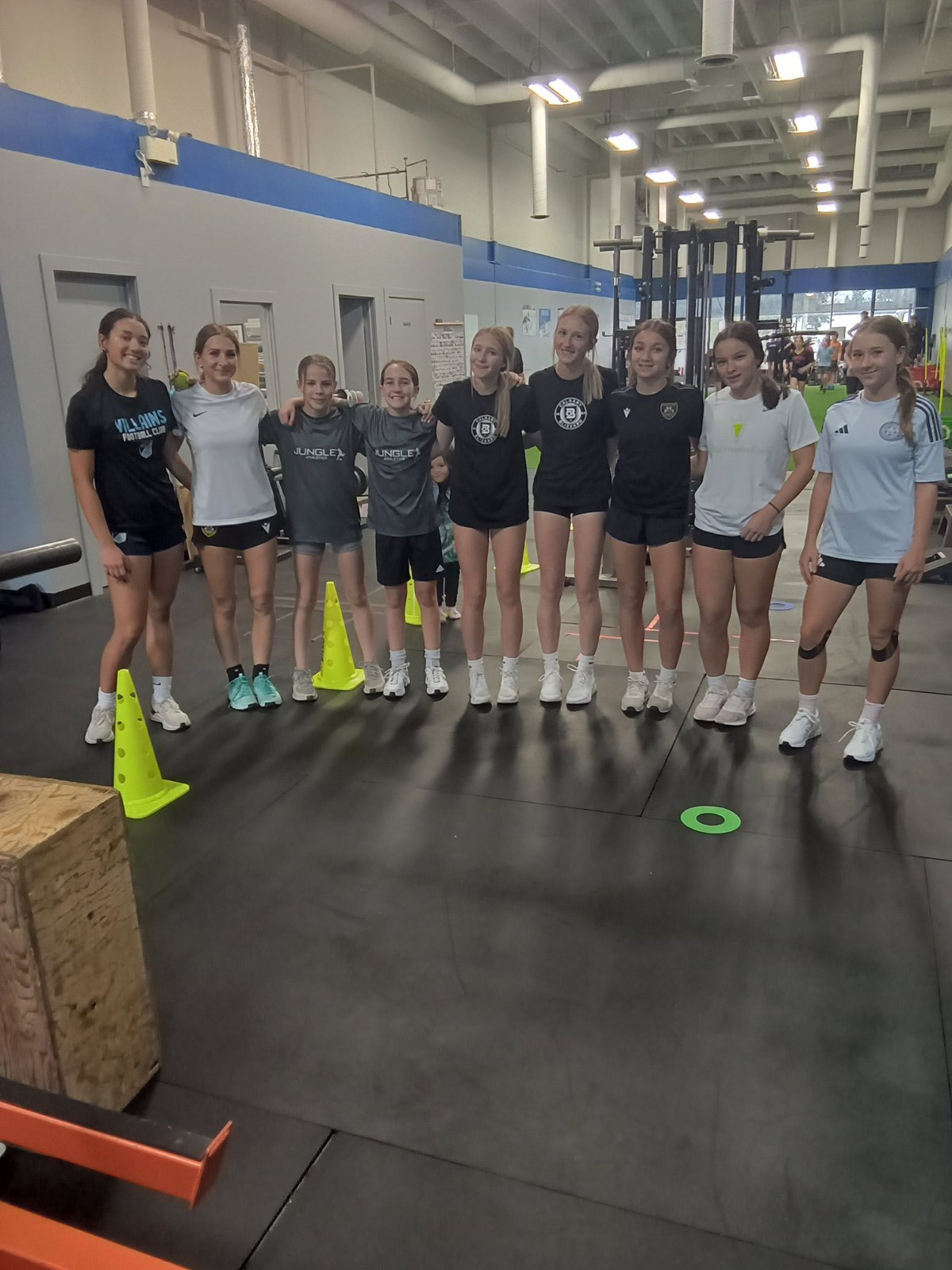
Start Your Player's Story.
We'll time your player, film them, and show you what's holding them back. You'll leave with a clear plan, whether you train with us or not.
134 71 Ave SE, Calgary · Free parking
Before You Book.
Is it really free?
Yes. 60 minutes, no credit card, no obligation.
What ages?
Our core is ages 8 to 14, the window when speed and coordination are most trainable. Most of our young soccer players want to make APDL. We also work with older APDL players.
Why Fridays?
Most soccer teams don't train or play on Fridays, so players arrive fresh. Speed only improves when athletes are fresh.
My player already does speed and agility with their club.
Most in-house programs are conditioning: lots of reps, short rest, players finish tired. We laser-time every sprint, give full recovery between reps, film every rep, and change the stride itself. That's what moves top speed.
Why do the sessions look easy?
Because real speed work needs full recovery. Short, all-out sprints followed by rest. If your player leaves exhausted, it was conditioning, not speed. Why our sessions look easy →
What should my player bring?
Athletic clothes, clean indoor running shoes (no cleats), and water. Parents are welcome to stay and watch.